
Foods That Fool You: A Guide to Blood Glucose and Everyday Eating
Some of the foods we reach for most confidently — fruit juice, honey, a handful of raisins — can raise blood glucose faster than a piece of cake. Here is a clear look at what is actually happening and why it matters.
Find Out More
The Disconnect Between Reputation and Reality
There is a long list of foods that have built a strong reputation for being wholesome and nutritious — and for the most part, that reputation is deserved. The issue is not that these foods are bad. It is that their effect on blood glucose is often quite different from what most people assume.
A glass of beetroot juice, a pot of low-fat yoghurt, a handful of dates — these are things people actively choose because they believe they are making a healthy decision. And in many ways they are. But if blood glucose stability is something you need to be mindful of, these same foods deserve a second look.
This page is educational and for general information only. Please speak with your doctor or a qualified dietitian before changing your diet.
How Common Foods Compare — A Simple Colour Guide
This is a rough overview of how various everyday foods tend to affect blood glucose. It is a starting point for awareness — not a strict rulebook. Context, portion size and what you eat alongside each food all make a difference.
This overview is for general education only and should not replace advice from a healthcare professional.
Four Foods Worth Understanding Properly
Each of these is genuinely nutritious in other ways. The point is not to avoid them — it is to understand how they behave so you can make choices that fit your own needs.
Fruit Juice
The juicing process removes most of the fibre that normally slows sugar absorption. What remains is essentially liquid sugar — even in a completely unsweetened, freshly pressed glass. Eating the whole fruit is meaningfully different for blood glucose.
Granola & Sweetened Cereals
Breakfast cereals and granola bars that look wholesome often contain more sugar per serving than many people realise. Honey, oat syrups and dried fruit are all common ingredients that push the sugar content up significantly. The label tells the real story.
Honey & Agave Syrup
Both are genuinely natural. Both contain trace nutrients that plain sugar does not. But both are composed primarily of simple sugars that the body absorbs quickly — producing a blood glucose response that is not very different from ordinary table sugar in practical terms.
Cooked Starchy Vegetables
Boiling or mashing starchy vegetables — potato, parsnip, cooked beetroot — changes how quickly their starch is digested. The same vegetable raw has a notably lower GI than when it is cooked soft. Portion size and what you eat alongside these foods matters a great deal.
Building a Plate That Works With Your Body
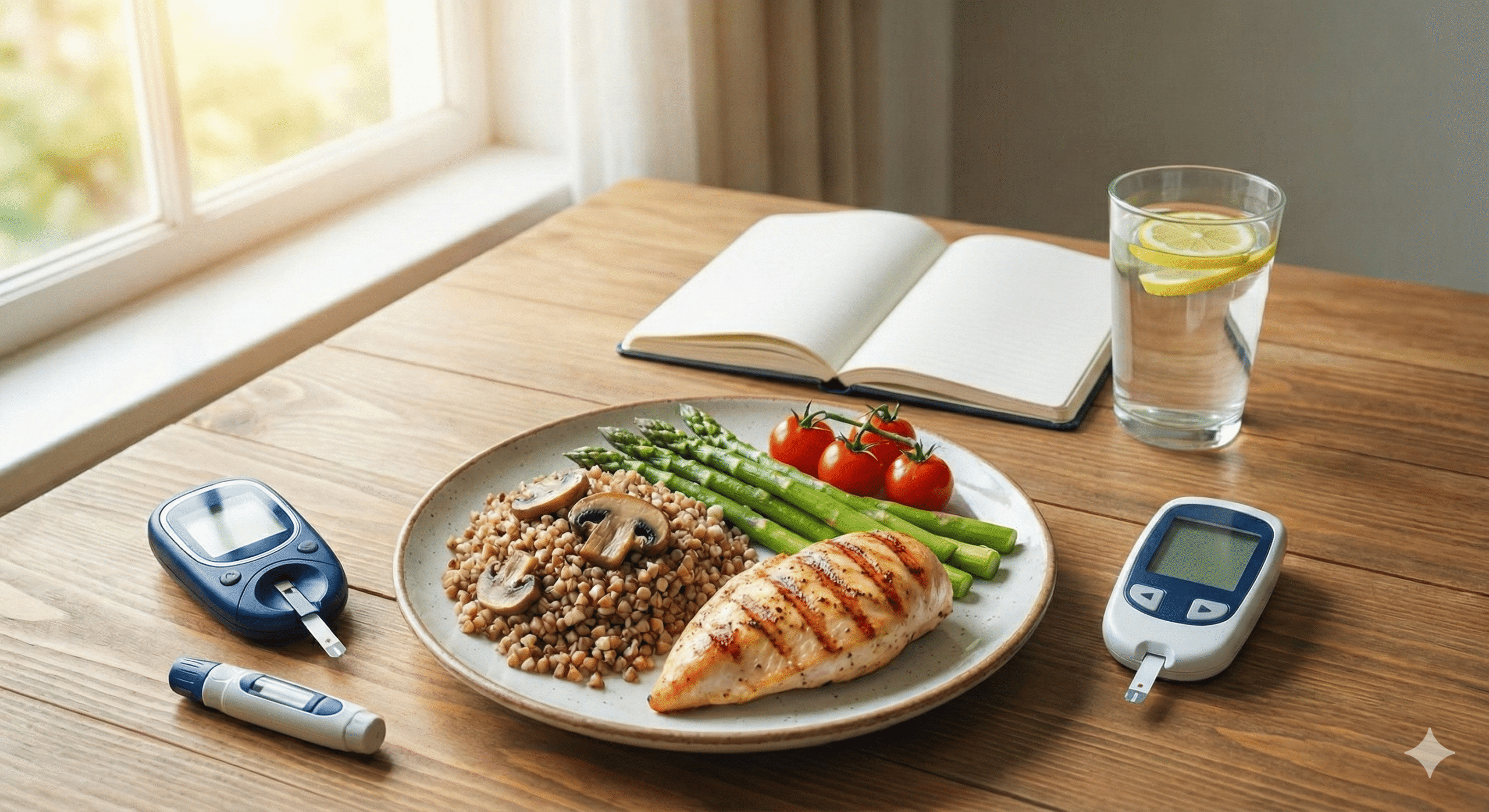
One of the most practical pieces of knowledge about blood glucose is also one of the simplest: combining foods changes their effect. Eating carbohydrates alongside protein, fat or fibre slows down how quickly sugar enters the bloodstream. The meal as a whole matters more than any individual ingredient.
This means that someone who eats a small portion of granola alongside eggs and vegetables is having a very different experience at a blood glucose level than someone eating a large bowl of granola with juice. The foods are the same — the context is not.
These are general principles for educational awareness. Individual needs vary, and for guidance personalised to your health situation, a qualified doctor or dietitian is the right resource.
Why "No Added Sugar" Does Not Always Mean What You Think
"No added sugar" is a factual claim, but it only means that no sugar was added during production — not that the product is low in sugar overall. Fruit juices, for example, can carry this label while containing as much natural sugar per glass as a soft drink. The sugar was already in the fruit; it simply was not added separately.
Similarly, "made with honey" or "sweetened with fruit" sounds wholesome, but both honey and fruit concentrates are forms of sugar that behave in a broadly similar way once inside the body. The source of the sugar matters far less than its total quantity and how it is absorbed.
Looking at the total sugars figure on the nutritional label — rather than relying on front-of-pack language — gives a much more accurate picture of what a product actually contains. It takes a few seconds and quickly becomes second nature. As always, this is general information; please consult a healthcare professional for advice suited to you.
From Our Readers
"I had been drinking a large glass of pomegranate juice every morning for about two years, believing it was one of the best things I could do for my health. When I started looking more carefully at nutrition, I was surprised to find out how much sugar a glass actually contains — and how quickly it is absorbed compared to eating the whole fruit. Simple knowledge that genuinely changed my daily routine."
— Tanmay B., Kolkata
"My husband was advised to pay more attention to his blood sugar. The first step was looking more carefully at what we were actually eating day to day — and we found several things we had never questioned, including the flavoured yoghurt we kept in the fridge and the honey we added to almost everything. Making those two changes alone made a noticeable difference to how he felt."
— Rina C., Durgapur
Get in Touch
Contact Us
Have a question about blood glucose, food choices or healthy eating in general? Send us a message and we will be happy to help where we can.
Email:
hello (at) pudofip.icu
Phone:
+91 33 4016 7253
Address:
18, Park Street, Kolkata 700016, West Bengal, India
Frequently Asked Questions
Is vegetable juice better than fruit juice for blood sugar?
It depends entirely on the vegetables. Leafy green juices (spinach, cucumber, celery) tend to be much lower in sugar and have a gentler effect on blood glucose. Root vegetable juices — carrot, beetroot, parsnip — contain more natural sugar and absorb quickly without the fibre of the whole vegetable. If you enjoy juices, green-heavy blends are generally the better option from a blood glucose perspective.
Can I still use honey if I am trying to keep blood sugar stable?
In small amounts, honey is unlikely to cause significant problems for most people. The issue arises when it is used freely as a "healthy" substitute for sugar — often in larger quantities than people would use ordinary sugar, because it feels more virtuous. A thin drizzle over oats or yoghurt is very different from a large spoonful stirred into drinks or recipes several times a day. Awareness of quantity matters more than the choice of sweetener.
Are ripe bananas worse for blood glucose than unripe ones?
Yes, in general. As a banana ripens, the starch inside it converts to simple sugars — which digest faster and produce a higher glycaemic response. A slightly green banana has a meaningfully lower GI than a very ripe, soft one. That said, a single banana as part of a balanced meal is not something most people need to worry greatly about. It is a practical piece of knowledge rather than a reason for concern.
Does fat in food help slow down blood glucose rises?
Yes. Fat slows gastric emptying — meaning food moves more slowly from the stomach into the small intestine, which slows the absorption of sugar. This is one reason why eating full-fat yoghurt tends to produce a lower and slower glucose response than eating a low-fat sweetened version. It is also why a meal that includes healthy fat alongside carbohydrates tends to be gentler on blood glucose than one built mainly on starchy or sugary foods alone.
Is the information on this site medical advice?
No. All content on this site is provided for general educational purposes only. It is not intended to diagnose, treat or replace professional medical or dietary advice. Everyone's health situation is different, and individual needs around blood glucose, diet and nutrition can vary significantly. Please consult your doctor, registered dietitian or a qualified healthcare professional before making changes to your diet or health routine.